Dam & reservoir engineering
Feasibility inputs, catchment assessment and site-specific planning for dams and reservoirs, including consideration of embankments, spillways, outlets and access.

From dam and reservoir engineering to water pans, tanks, towers and distribution networks—integrated water infrastructure shaped around the site and the people who depend on it.
Useful water infrastructure connects the source to where water is needed.
Brisma-Africa brings planning, civil works and storage into one clear project conversation. Whether the brief is a reservoir, a water pan, elevated storage or a distribution network, each site starts with its own water demand, ground conditions, topography and operating needs.
See our project approachServices can be scoped individually or coordinated as one water infrastructure project. The final solution follows site investigation and engineering review.
Feasibility inputs, catchment assessment and site-specific planning for dams and reservoirs, including consideration of embankments, spillways, outlets and access.
Water-pan planning and construction, with earthworks, basin shaping, water-retention measures and finishing tailored to the location and intended use.
Ground-level and elevated storage structures to support water supply schemes, institutions, communities and agricultural sites.
Pipeline routes and network construction to move stored or treated water toward supply points, with connections and layout planned for the project.
Early project investigation to understand catchment, terrain, soil conditions, water demand and practical access before a construction scope is fixed.
Coordinate civil works, construction sequencing and project handover around site conditions, quality requirements and intended system operation.
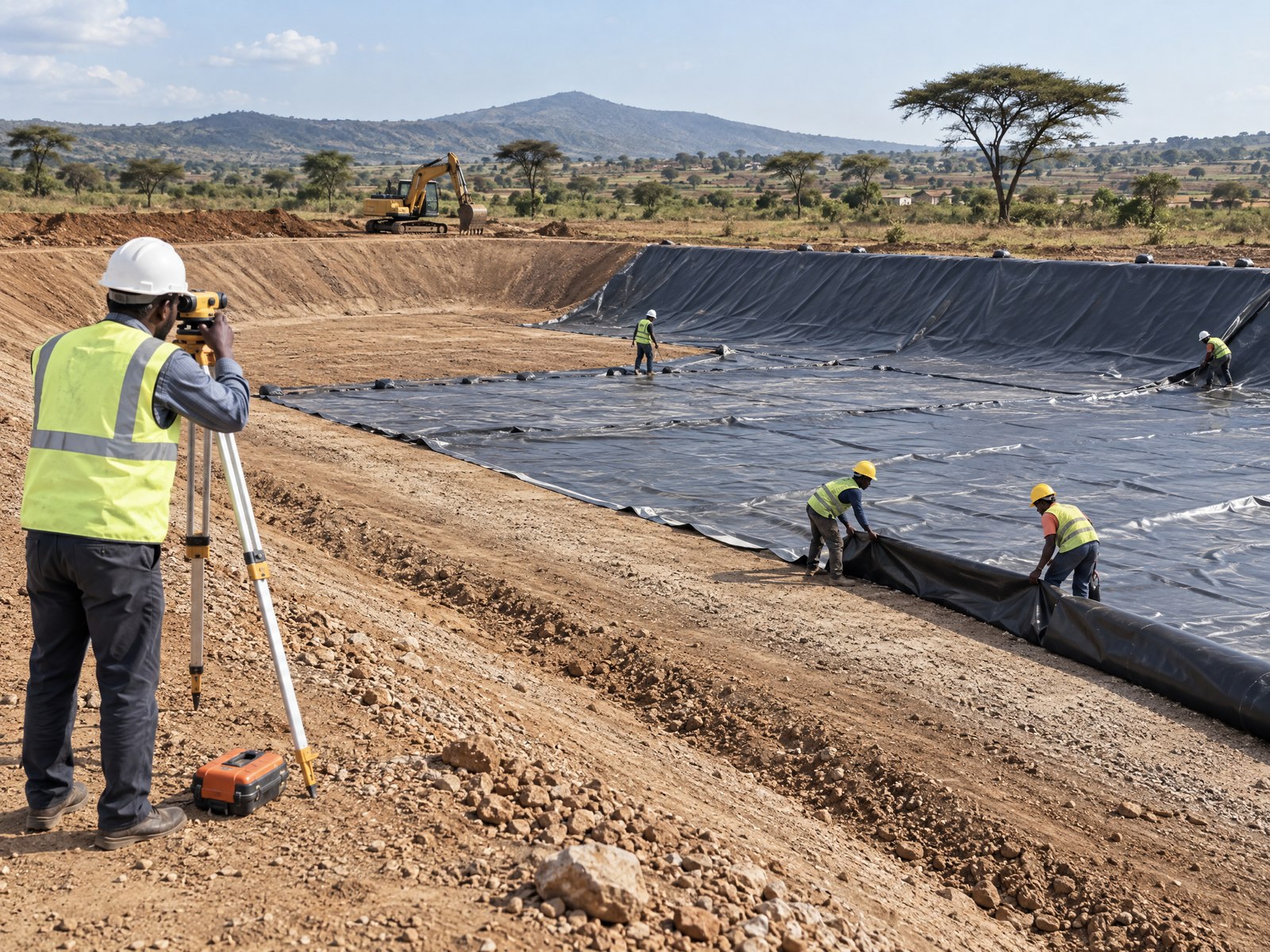 01 WATER RETENTION
Storage begins with what the land can collect and safely hold.
Reservoir and dam projects call for attention to catchment, ground conditions and how water enters, is stored and released. For water pans, practical basin geometry, suitable retention details and access all matter. Early investigation helps make the design and construction scope more specific to the site.
Storage capacity only helps when the water can reach the people, fields and facilities that need it.
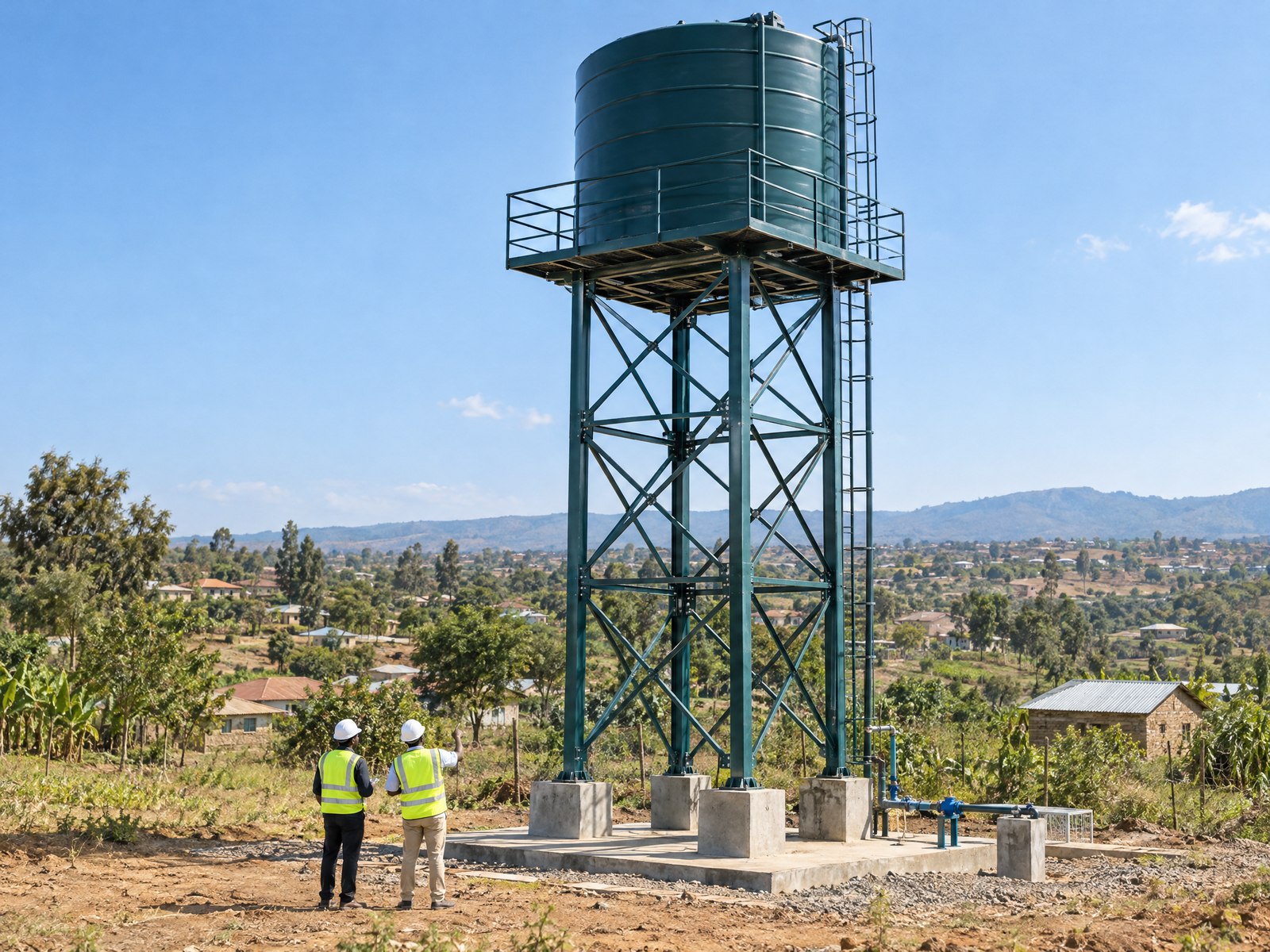
Storage structures planned around demand, site conditions and the distribution scheme.
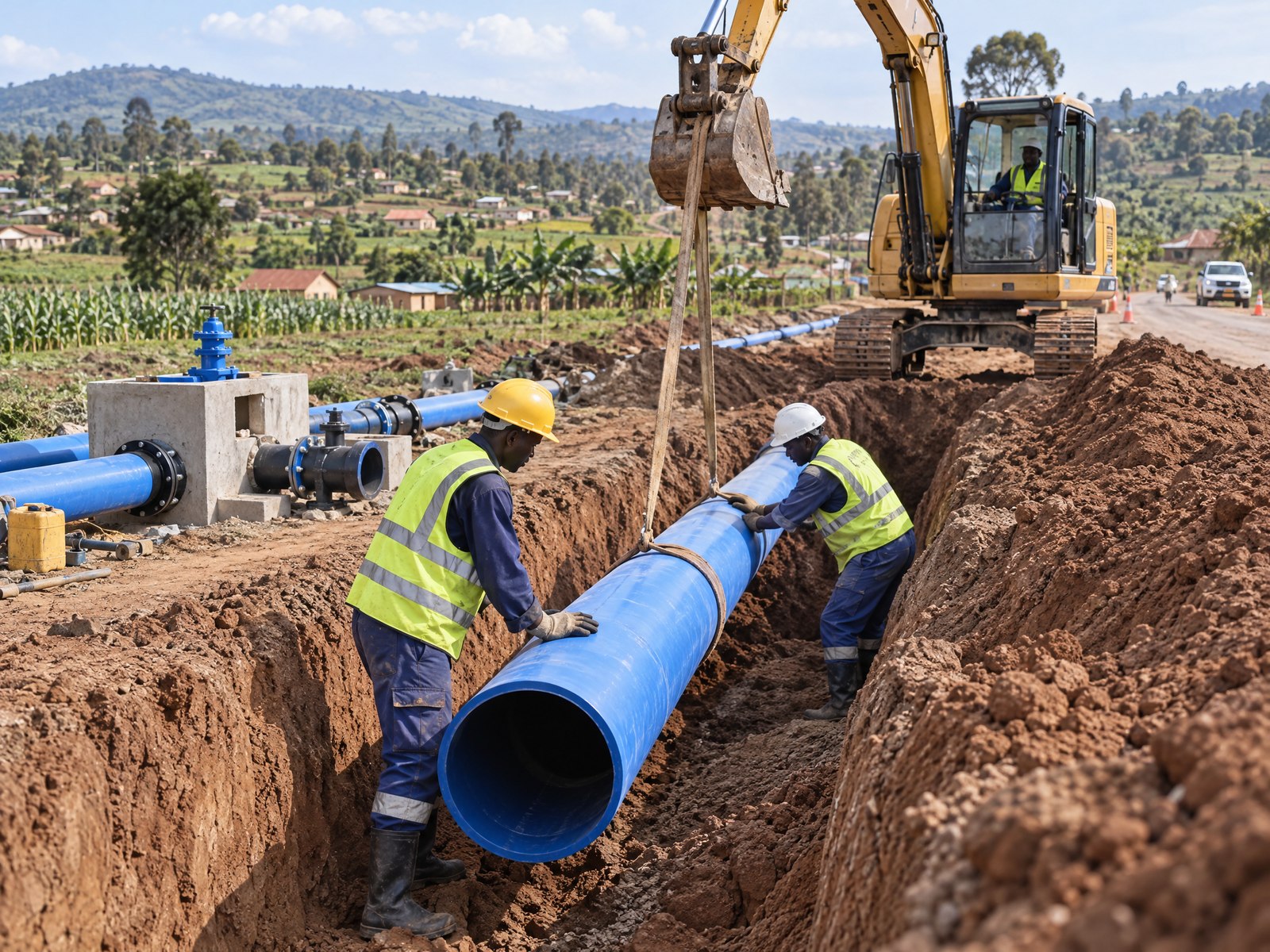
Pipeline construction and connections aligned with the route and intended service area.
One connected brief. Bring source, storage and distribution into the same project conversation from the outset.
A practical sequence links the initial water need to a constructible design, a coordinated build and a usable handover.
Understand the water demand, catchment, landform, soil information and existing access.
Set out a project scope for storage, outlet works, tank capacity or pipeline routes.
Coordinate earthworks and civil construction with the site design and work sequence.
Review completed works, record handover details and identify ongoing care needs.
Final design, approvals, environmental requirements, cost and construction method depend on project-specific investigations and applicable local review.